AI vs Traditional Software: When to Use What
Use AI where interpretation is needed and traditional software where rules, reliability, and precision matter most.
Ashar Iftikhar
Author · Operations Specialist
Contents
Implementation note
Ashflow approaches AI vs traditional software as an operating system problem: map the workflow, simplify the path, connect the tools, add AI where judgment or language is useful, and measure the result.
AI and traditional software solve different problems
Traditional software is best for precise rules, transactions, permissions, and repeatable workflows.
AI is best for language, summarization, classification, extraction, and fuzzy judgment.
Strong systems use both.
When to use AI
Use AI when the input is messy, unstructured, or language-heavy: emails, chats, calls, documents, and research.
AI can turn ambiguity into structured data.
It needs guardrails for high-stakes actions.
When to use traditional software
Use traditional software for billing, inventory counts, permissions, compliance, data storage, and deterministic workflow execution.
These areas need predictable behavior.
AI should support, not replace, the core logic.
Mid-article diagnostic
Find the highest-leverage workflow before you build
Ashflow can map the fastest automation opportunity and show where the ROI is most likely to appear first.
Get Free AI AuditHybrid architecture
A hybrid system lets AI interpret and draft while traditional automation validates, routes, logs, and executes.
This creates flexibility with reliability.
It is the architecture behind many premium AI business systems.
Decision checklist
Ask whether the task needs judgment, precision, auditability, speed, integration, or human review.
The answers determine the right tool.
Choosing well prevents expensive rebuilds.
Practical next steps
- List the workflows that repeat every week and touch revenue, customers, inventory, reporting, or finance.
- Score each workflow by time cost, error cost, revenue impact, and ease of automation.
- Pick one workflow, ship a reviewed first version, and measure before expanding the system.
Want the Ashflow version of this system?
Book a free market audit and we will identify the highest-leverage automation opportunities inside your current business model.
Get Free AI AuditRelated reading
Frequently Asked Questions
What is the fastest way to start with AI vs traditional software?
Start with one measurable workflow that touches revenue, customer experience, or recurring admin. Map the current process, simplify it, launch with human review, and measure the before-and-after impact.
How long does an automation project usually take?
A focused first workflow can often launch in two to four weeks. Larger systems that connect CRM, billing, inventory, support, and reporting usually need a phased 60 to 90 day rollout.
How does Ashflow help with ai vs traditional software: when to use what?
Ashflow designs and deploys practical AI business systems around the workflows that already drive your revenue. The process starts with a free market audit, then moves into a scoped system build with measurable operating outcomes.
"Ashflow is founded and led by Ashar Iftikhar, AI Systems Architect for clients across UAE, USA, UK, and Canada. Founder-led delivery, clear ownership, and direct communication throughout the build."
Read Ashar's story →Keep building the system
 Technology & Trends
The Future of Business Automation: Trends 2026
11 min read
 Technology & Trends
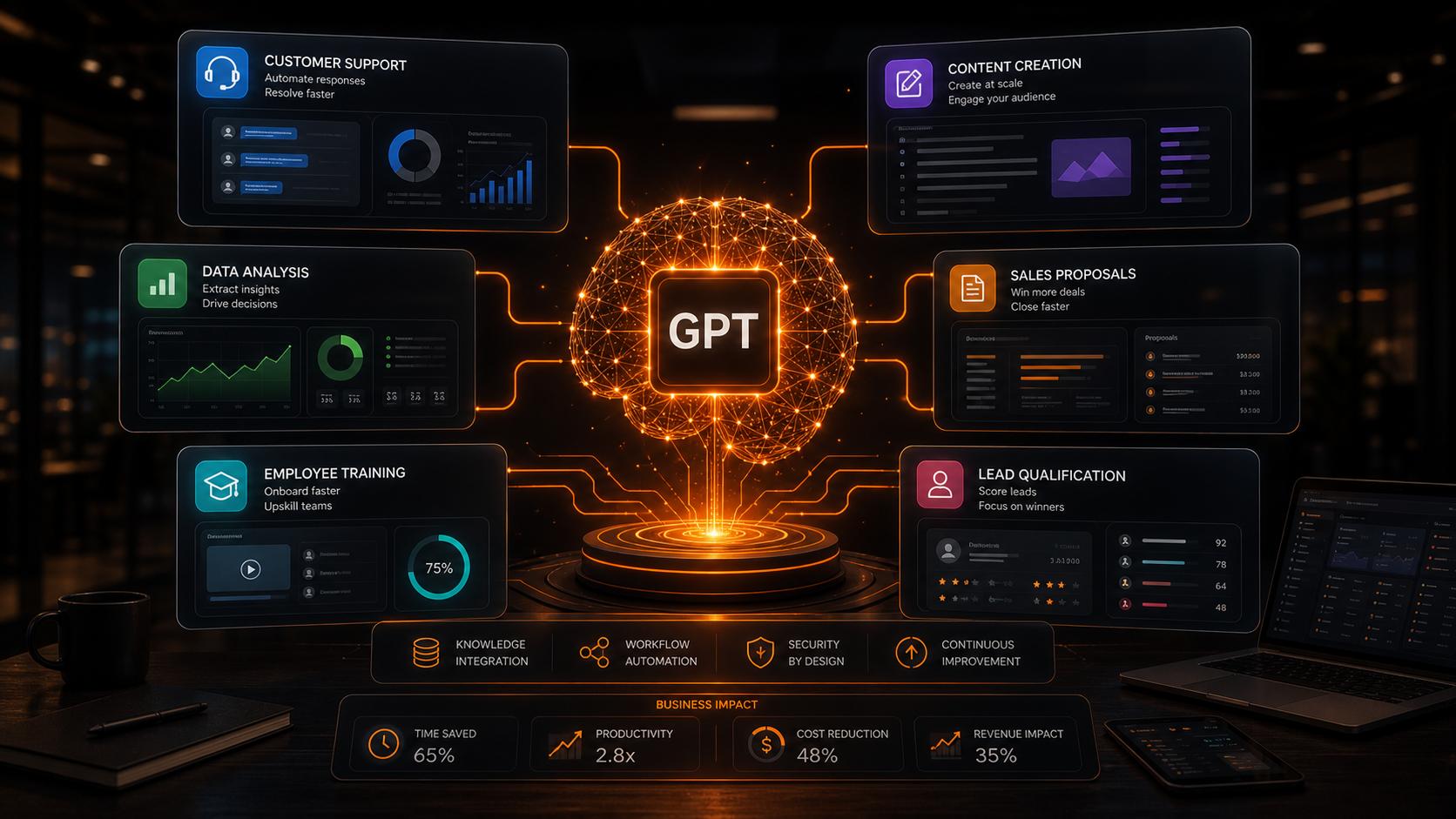
ChatGPT for Business: Practical Use Cases Beyond Chat
15 min read
 Technology & Trends
No-Code Automation Tools: Build Without Engineers
11 min read
 AI Automation
AI Automation for Small Businesses: ROI Guide 2026
15 min read
Let's fill your calendar with booked clients.
Book a free growth audit. We'll map your biggest opportunities and the fastest path to revenue — whether we work together or not.