AI Inventory Management for Ecommerce: Real-Time Sync
A real-time inventory automation guide for multi-channel sellers and growing ecommerce teams.
Ashar Iftikhar
Author · Operations Specialist
Contents
Implementation note
Ashflow approaches inventory management automation as an operating system problem: map the workflow, simplify the path, connect the tools, add AI where judgment or language is useful, and measure the result.
Why inventory becomes a growth blocker
Inventory mistakes create refunds, negative reviews, stockouts, and cash tied up in the wrong products.
Manual spreadsheets cannot keep up with multi-channel selling.
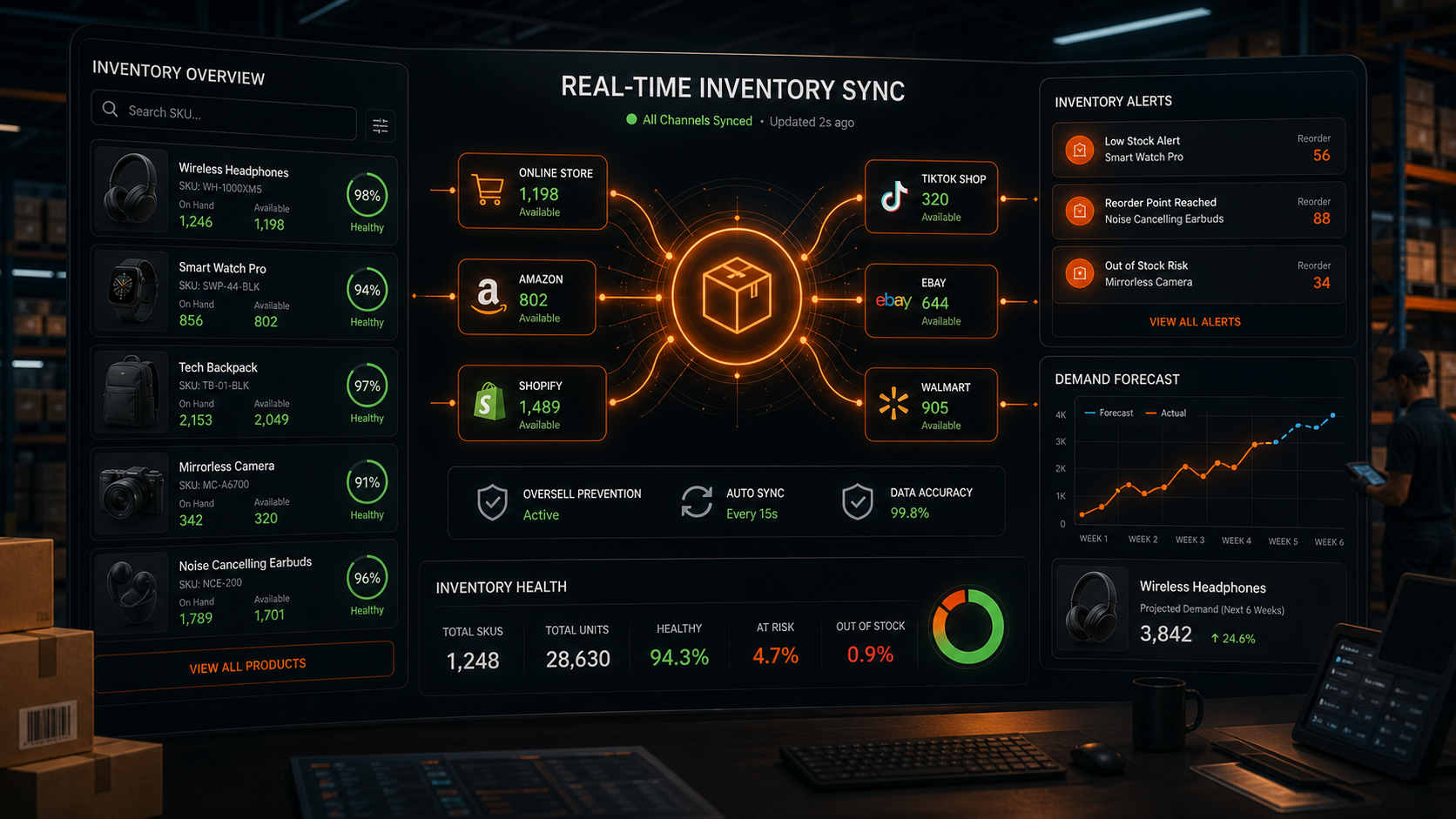
Real-time sync becomes essential as order volume grows.
Core inventory workflows
Centralize stock counts, reserve inventory for orders, sync availability to channels, and alert teams when thresholds are crossed.
AI can help forecast demand and flag unusual movement.
The foundation is accurate event data.
Preventing oversells
Oversells happen when channels update slowly or teams rely on manual reconciliation.
Automation should reserve stock immediately and push updates across every marketplace.
Exception handling matters when APIs lag.
Mid-article diagnostic
Find the highest-leverage workflow before you build
Ashflow can map the fastest automation opportunity and show where the ROI is most likely to appear first.
Get a 5-Day System PlanForecasting and replenishment
AI can use order history, seasonality, campaign plans, and supplier lead times to recommend reorder points.
Forecasting should support decisions, not replace merchant judgment.
The best systems expose assumptions clearly.
Implementation checklist
Clean SKUs, map channels, define thresholds, test sync speed, create alerts, and review reports weekly.
Inventory automation is a reliability project before it is an AI project.
Accuracy earns the right to scale.
Practical next steps
- List the workflows that repeat every week and touch revenue, customers, inventory, reporting, or finance.
- Score each workflow by time cost, error cost, revenue impact, and ease of automation.
- Pick one workflow, ship a reviewed first version, and measure before expanding the system.
Want the Ashflow version of this system?
Book a free market audit and we will identify the highest-leverage automation opportunities inside your current business model.
Get a 5-Day System PlanRelated reading
Frequently Asked Questions
What is the fastest way to start with inventory management automation?
Start with one measurable workflow that touches revenue, customer experience, or recurring admin. Map the current process, simplify it, launch with human review, and measure the before-and-after impact.
How long does an automation project usually take?
A focused first workflow can often launch in two to four weeks. Larger systems that connect CRM, billing, inventory, support, and reporting usually need a phased 60 to 90 day rollout.
How does Ashflow help with ai inventory management for ecommerce: real-time sync?
Ashflow designs and deploys practical AI business systems around the workflows that already drive your revenue. The process starts with a free market audit, then moves into a scoped system build with measurable operating outcomes.
"Ashflow is founded and led by Ashar Iftikhar, AI Systems Architect for clients across UAE, USA, UK, and Canada. Founder-led delivery, clear ownership, and direct communication throughout the build."
Read Ashar's story →Keep building the system
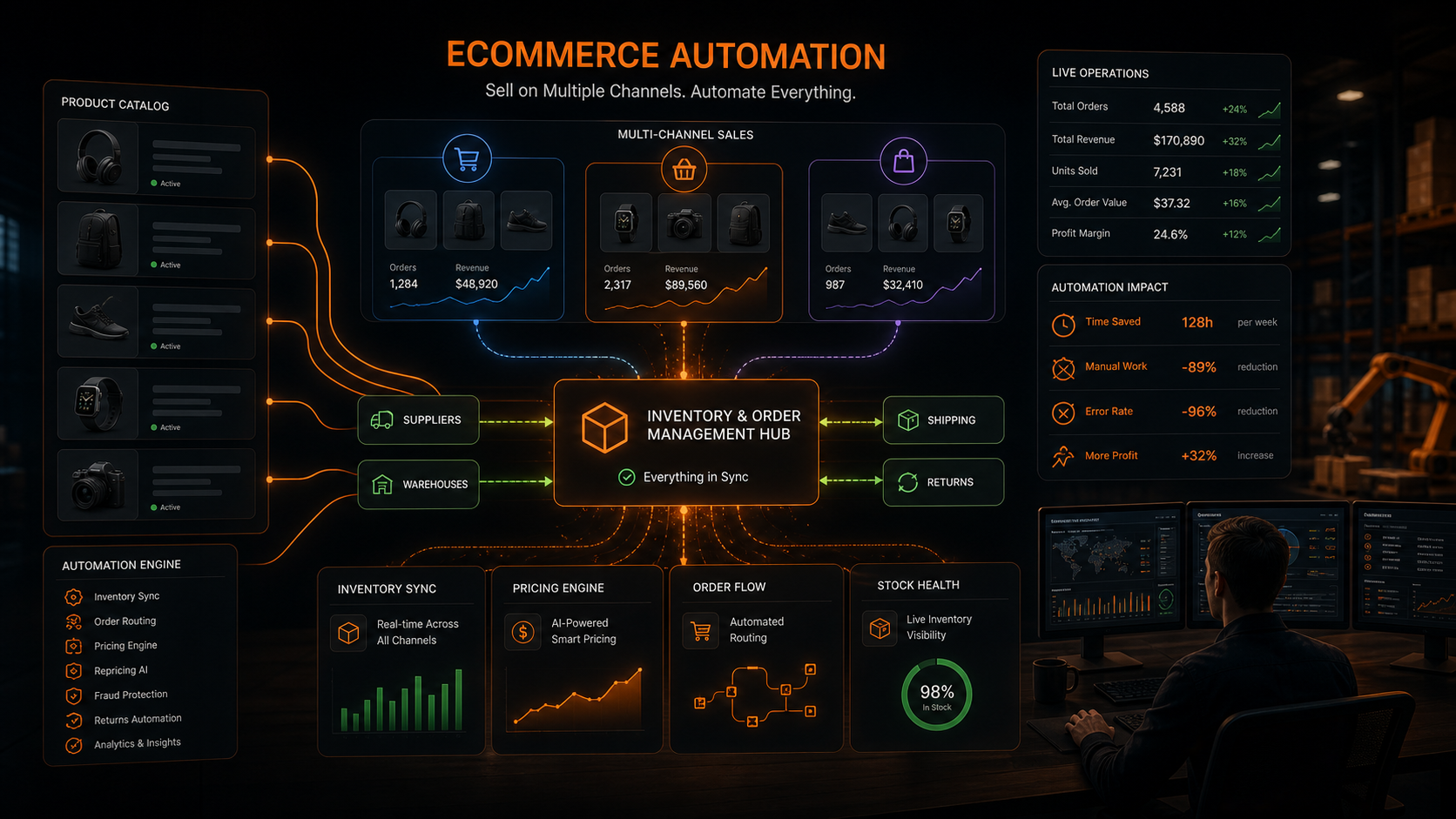 Ecommerce Automation
Ecommerce Automation: Sell on eBay, Amazon, and TikTok Shop
15 min read
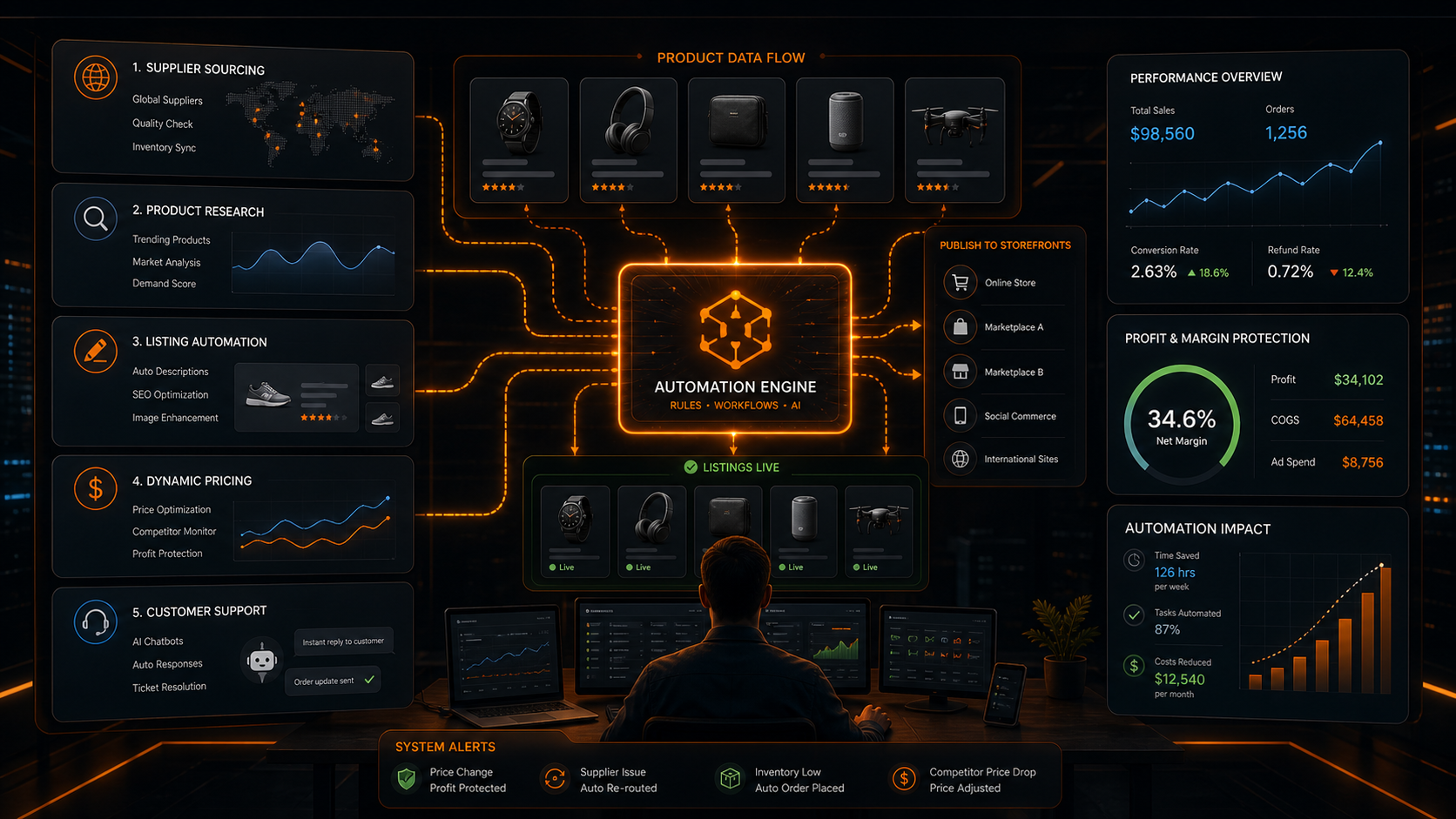 Ecommerce Automation
Dropshipping Automation Tools: The Ultimate 2026 Guide
15 min read
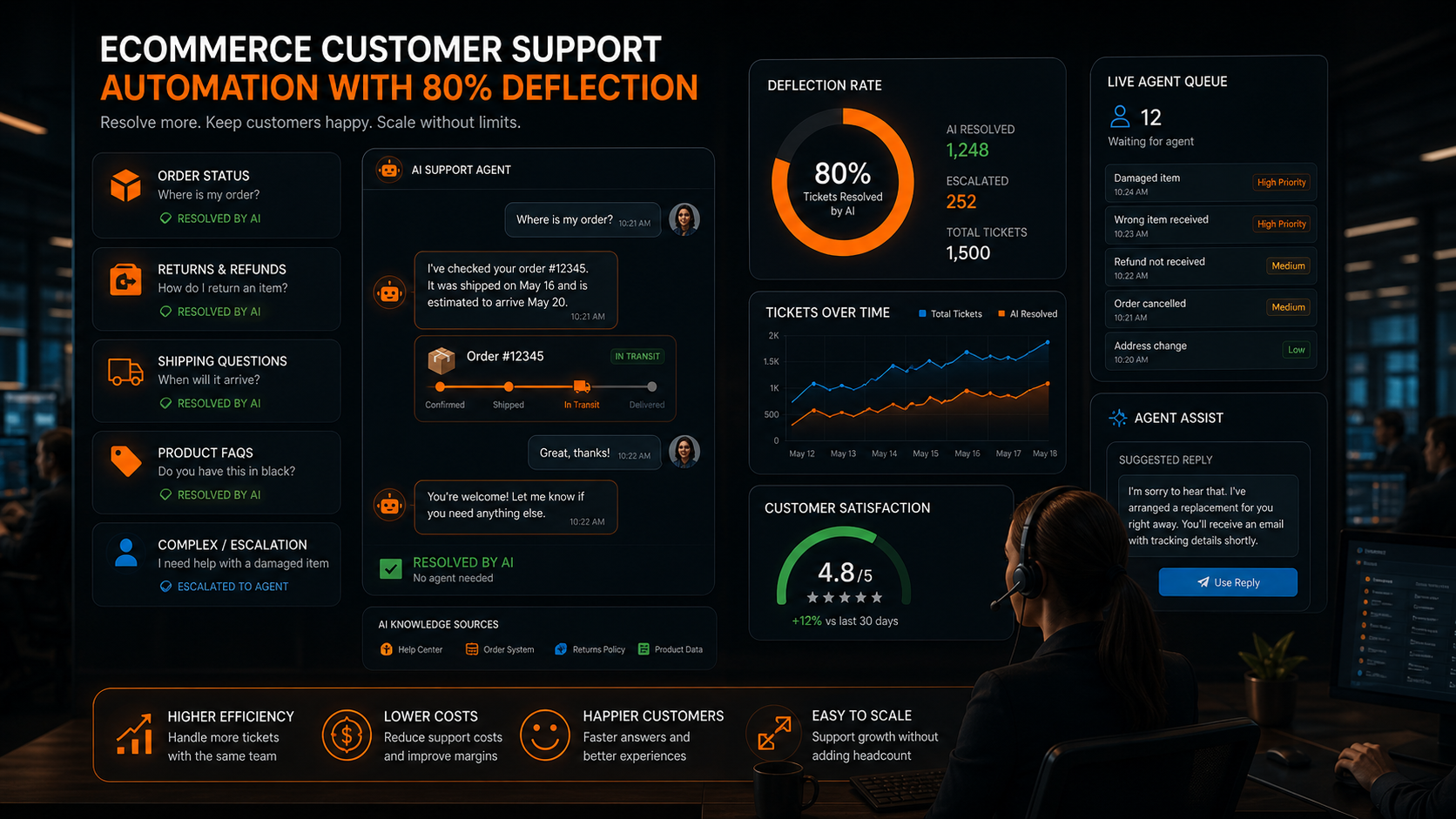 Ecommerce Automation
Ecommerce Customer Support Automation With 80% Deflection
11 min read
 AI Automation
AI Automation for Small Businesses: ROI Guide 2026
15 min read
Let's fill your calendar with booked clients.
Book a free growth audit. We'll map your biggest opportunities and the fastest path to revenue — whether we work together or not.