Ecommerce Automation: Sell on eBay, Amazon, and TikTok Shop
A complete operating model for selling across channels without oversells, pricing conflicts, or manual order chaos.
Ashar Iftikhar
Author · Operations Specialist
Contents
Implementation note
Ashflow approaches multi-channel ecommerce automation as an operating system problem: map the workflow, simplify the path, connect the tools, add AI where judgment or language is useful, and measure the result.
Why multi-channel selling is essential
Customers discover products across marketplaces, social commerce, and search. Selling on one channel limits reach and creates platform risk.
Multi-channel automation lets brands expand without multiplying manual operations.
The key is centralized control.
The multi-channel problem
Manual listing, inventory updates, price changes, and order routing create oversells, margin leaks, and fulfillment delays.
Each platform has different rules, fees, and customer expectations.
Automation keeps those differences manageable.
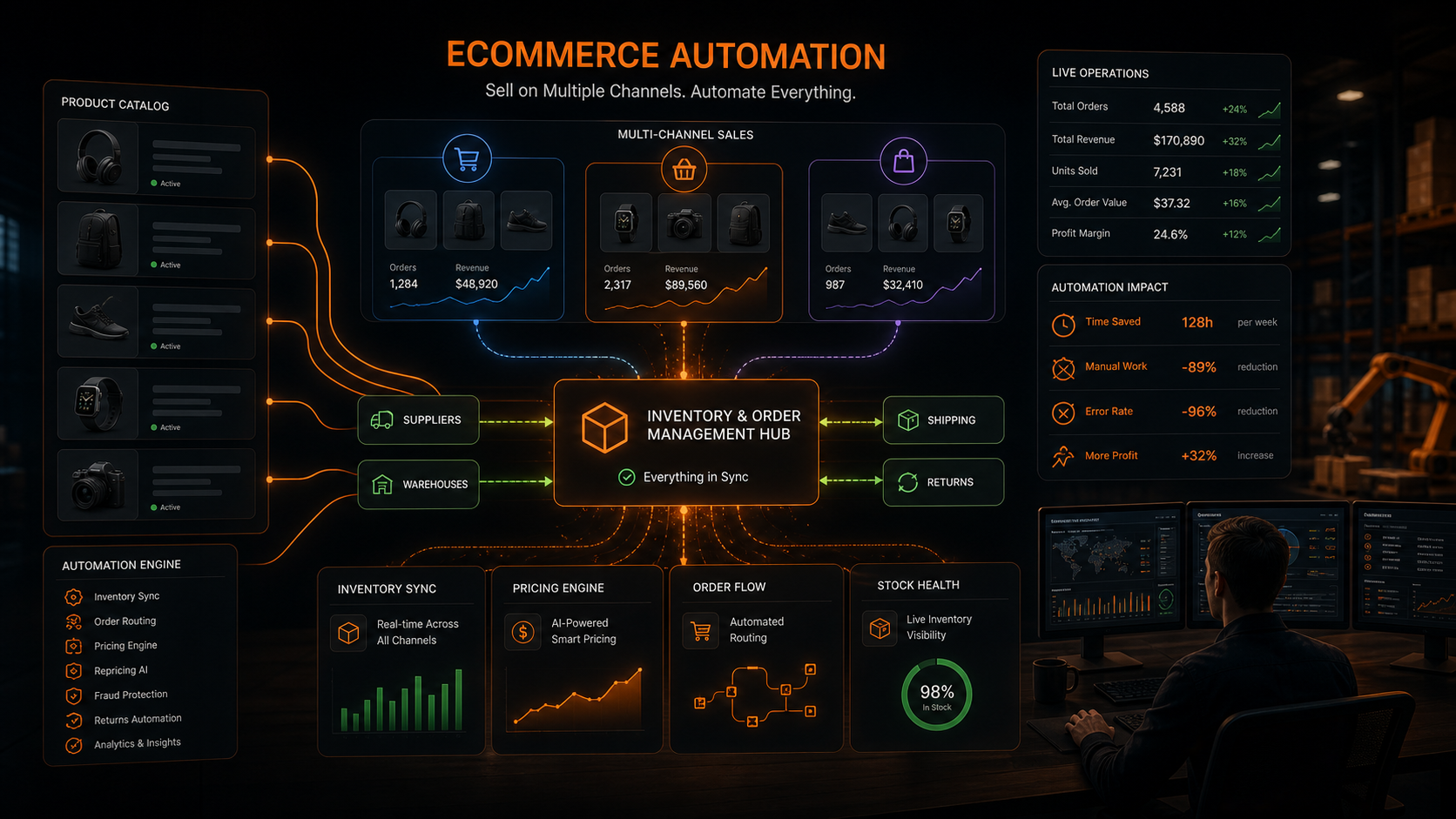
How the architecture works
A central product and inventory source pushes listings, pricing, and stock to each channel. Orders return to the fulfillment workflow.
Rules handle channel-specific margins, shipping, and content.
Dashboards surface exceptions before they become customer issues.
Step-by-step implementation
Choose channels, standardize SKUs, connect inventory, define pricing rules, route orders, and monitor exceptions.
Start with two channels before adding the third.
The goal is stable operations before maximum reach.
Mid-article diagnostic
Find the highest-leverage workflow before you build
Ashflow can map the fastest automation opportunity and show where the ROI is most likely to appear first.
Get a 5-Day System PlanCost and ROI
The costs include platform tools, integration work, catalog cleanup, and ongoing monitoring.
ROI comes from new channel revenue, fewer oversells, faster fulfillment, and less admin.
A well-built system grows revenue without growing the operations team at the same rate.
How this connects to the Ashflow system stack
For ecommerce automation, Ashflow connects the workflow to CRM, communication, reporting, and audit-ready tracking instead of leaving it as a disconnected automation.
The system should produce both operational output and leadership visibility: what happened, what changed, and what needs attention next.
That is what turns a useful automation into a business asset that can be improved over time.
Ecommerce Automation operating leverage snapshot
-31% manual order work
A composite ecommerce automation team replaced recurring admin, status checks, and manual reporting with a reviewed automation layer. The result was faster execution, cleaner handoffs, and a clearer path to scale without adding equivalent headcount.
Comparison framework
| Approach | Best for | Risk | Ashflow recommendation |
|---|---|---|---|
| Manual workflow | Low volume and high judgment | Slow response and hidden labor cost | Keep only where trust or expert judgment matters |
| No-code automation | Simple tool-to-tool handoffs | Fragile logic and limited observability | Use for quick wins and prototypes |
| Custom AI system | Revenue workflows and cross-tool operations | Needs stronger setup and ownership | Use when reliability and leverage matter |
Operator checklist
Baseline the current workflow with time, volume, error, and conversion metrics.
Choose one workflow owner and one success metric before implementation starts.
Connect the system of record first, then add AI for classification, drafting, or routing.
Add human review for money, compliance, angry customers, and high-value sales conversations.
Review performance after 14 days and decide whether to harden, expand, or simplify.
Practical next steps
- List the workflows that repeat every week and touch revenue, customers, inventory, reporting, or finance.
- Score each workflow by time cost, error cost, revenue impact, and ease of automation.
- Pick one workflow, ship a reviewed first version, and measure before expanding the system.
Want the Ashflow version of this system?
Book a free market audit and we will identify the highest-leverage automation opportunities inside your current business model.
Get a 5-Day System PlanRelated reading
Frequently Asked Questions
What is the fastest way to start with multi-channel ecommerce automation?
Start with one measurable workflow that touches revenue, customer experience, or recurring admin. Map the current process, simplify it, launch with human review, and measure the before-and-after impact.
How long does an automation project usually take?
A focused first workflow can often launch in two to four weeks. Larger systems that connect CRM, billing, inventory, support, and reporting usually need a phased 60 to 90 day rollout.
How does Ashflow help with ecommerce automation: sell on ebay, amazon, and tiktok shop?
Ashflow designs and deploys practical AI business systems around the workflows that already drive your revenue. The process starts with a free market audit, then moves into a scoped system build with measurable operating outcomes.
"Ashflow is founded and led by Ashar Iftikhar, AI Systems Architect for clients across UAE, USA, UK, and Canada. Founder-led delivery, clear ownership, and direct communication throughout the build."
Read Ashar's story →Keep building the system
 Ecommerce Automation
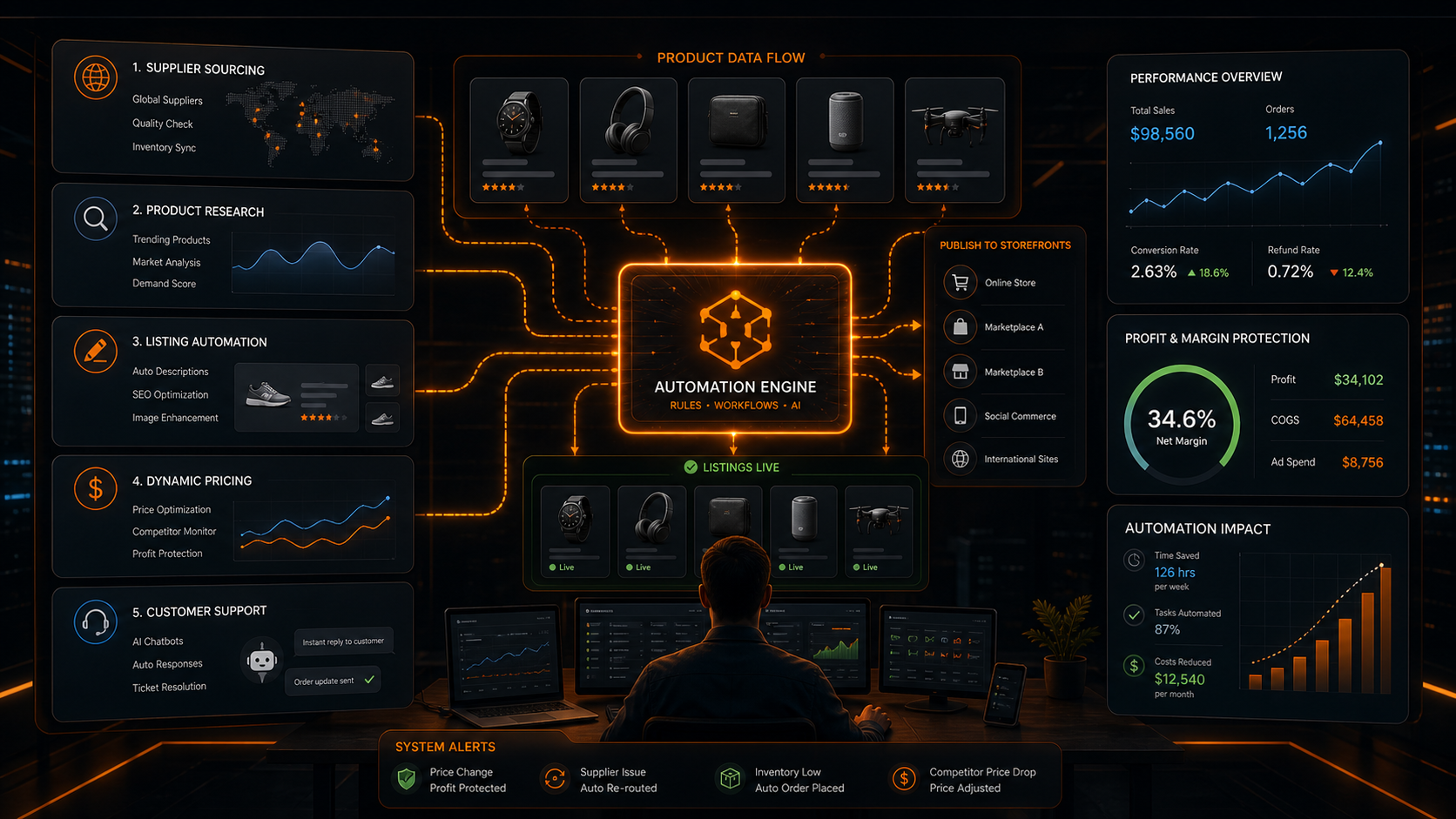
Dropshipping Automation Tools: The Ultimate 2026 Guide
15 min read
 Ecommerce Automation
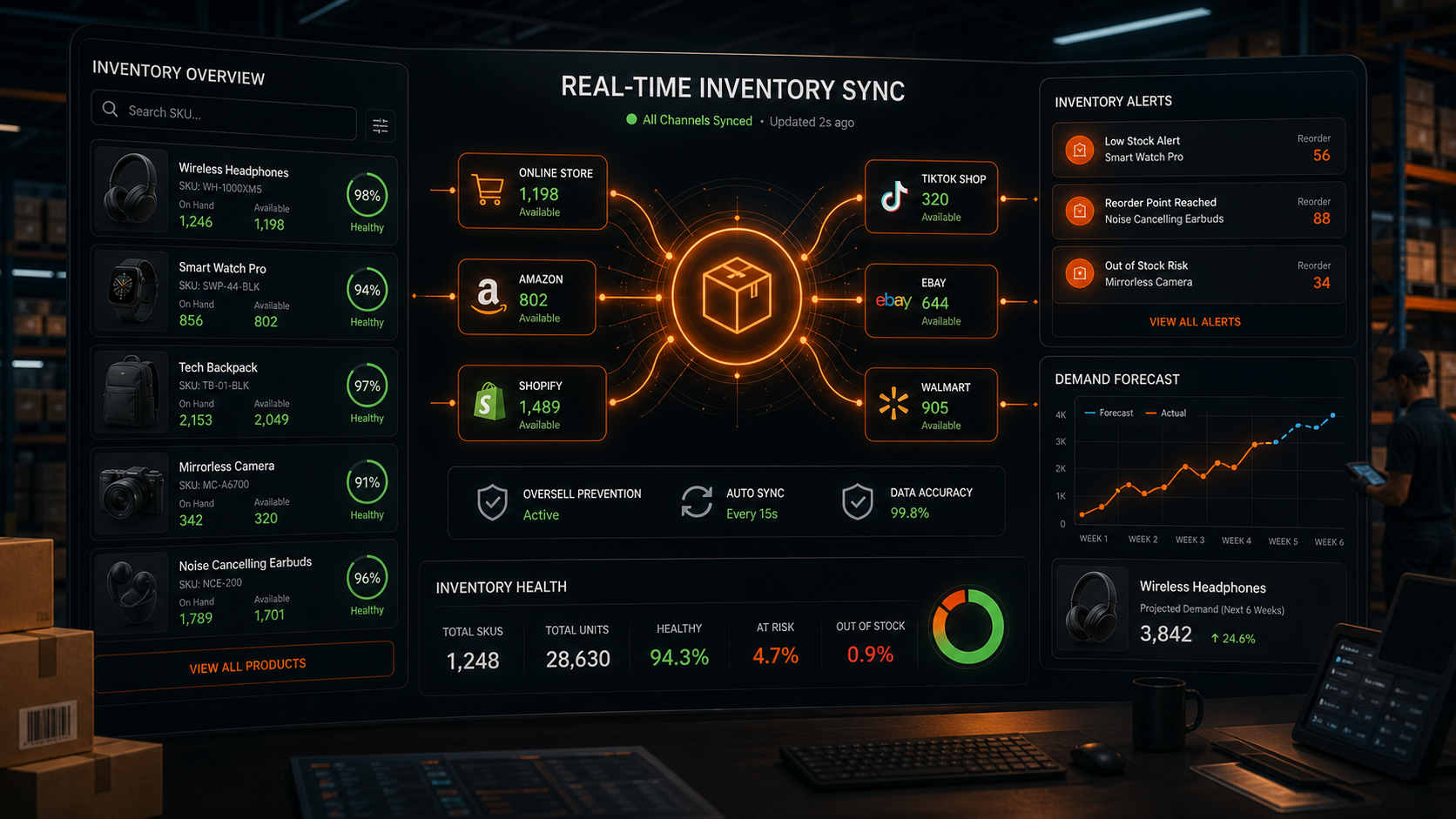
AI Inventory Management for Ecommerce: Real-Time Sync
11 min read
 Ecommerce Automation
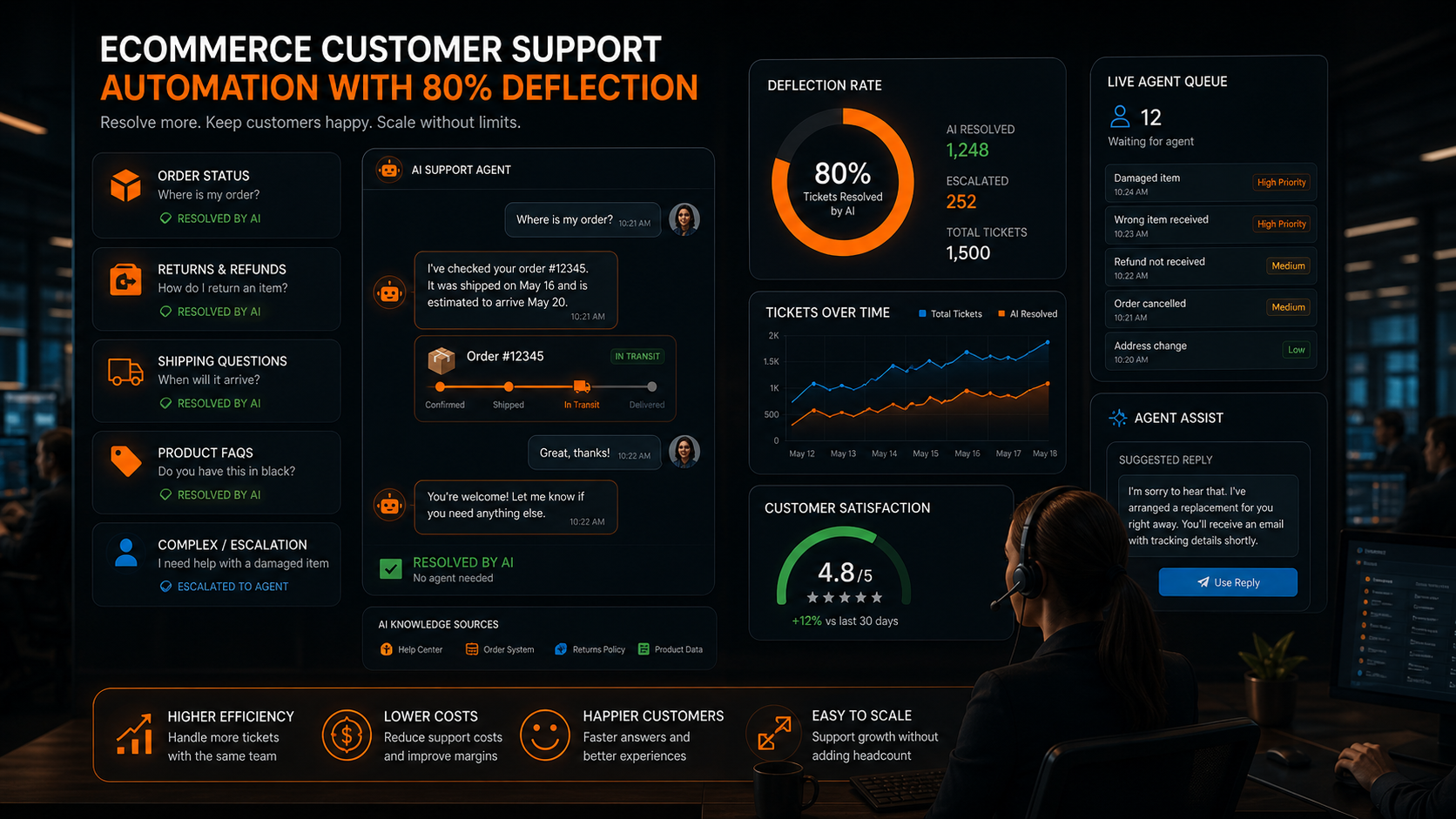
Ecommerce Customer Support Automation With 80% Deflection
11 min read
 AI Automation
AI Automation for Small Businesses: ROI Guide 2026
15 min read
Let's fill your calendar with booked clients.
Book a free growth audit. We'll map your biggest opportunities and the fastest path to revenue — whether we work together or not.