Supplier Management Automation: Find and Vet Faster
How ecommerce teams build a supplier management system that reduces risk and speeds up product expansion.
Ashar Iftikhar
Author · Operations Specialist
Contents
Implementation note
Ashflow approaches supplier management automation as an operating system problem: map the workflow, simplify the path, connect the tools, add AI where judgment or language is useful, and measure the result.
Why supplier work needs systems
Supplier problems show up as stockouts, late shipments, margin surprises, and customer complaints.
Manual supplier tracking becomes risky as SKU count grows.
Automation gives teams earlier warning signs.
Supplier discovery workflows
Use structured criteria for product category, minimum order, lead time, location, certifications, and margin potential.
Automation can gather and compare supplier data faster.
Humans still judge strategic fit and negotiation.
Vetting and scorecards
Create scorecards for reliability, responsiveness, pricing stability, quality, and return handling.
Update scores automatically from orders, support tickets, and delivery performance.
This turns supplier management into a measurable process.
Mid-article diagnostic
Find the highest-leverage workflow before you build
Ashflow can map the fastest automation opportunity and show where the ROI is most likely to appear first.
Get a 5-Day System PlanCommunication automation
Automate reorder requests, availability checks, document collection, and follow-up reminders.
Standard templates reduce miscommunication.
Escalate delays and pricing changes quickly.
Operational impact
Better supplier data supports pricing, inventory, product launches, and customer promises.
This is not just procurement cleanup. It is growth infrastructure.
Reliable suppliers make automation safer across the entire store.
Practical next steps
- List the workflows that repeat every week and touch revenue, customers, inventory, reporting, or finance.
- Score each workflow by time cost, error cost, revenue impact, and ease of automation.
- Pick one workflow, ship a reviewed first version, and measure before expanding the system.
Want the Ashflow version of this system?
Book a free market audit and we will identify the highest-leverage automation opportunities inside your current business model.
Get a 5-Day System PlanRelated reading
Frequently Asked Questions
What is the fastest way to start with supplier management automation?
Start with one measurable workflow that touches revenue, customer experience, or recurring admin. Map the current process, simplify it, launch with human review, and measure the before-and-after impact.
How long does an automation project usually take?
A focused first workflow can often launch in two to four weeks. Larger systems that connect CRM, billing, inventory, support, and reporting usually need a phased 60 to 90 day rollout.
How does Ashflow help with supplier management automation: find and vet faster?
Ashflow designs and deploys practical AI business systems around the workflows that already drive your revenue. The process starts with a free market audit, then moves into a scoped system build with measurable operating outcomes.
"Ashflow is founded and led by Ashar Iftikhar, AI Systems Architect for clients across UAE, USA, UK, and Canada. Founder-led delivery, clear ownership, and direct communication throughout the build."
Read Ashar's story →Keep building the system
 Ecommerce Automation
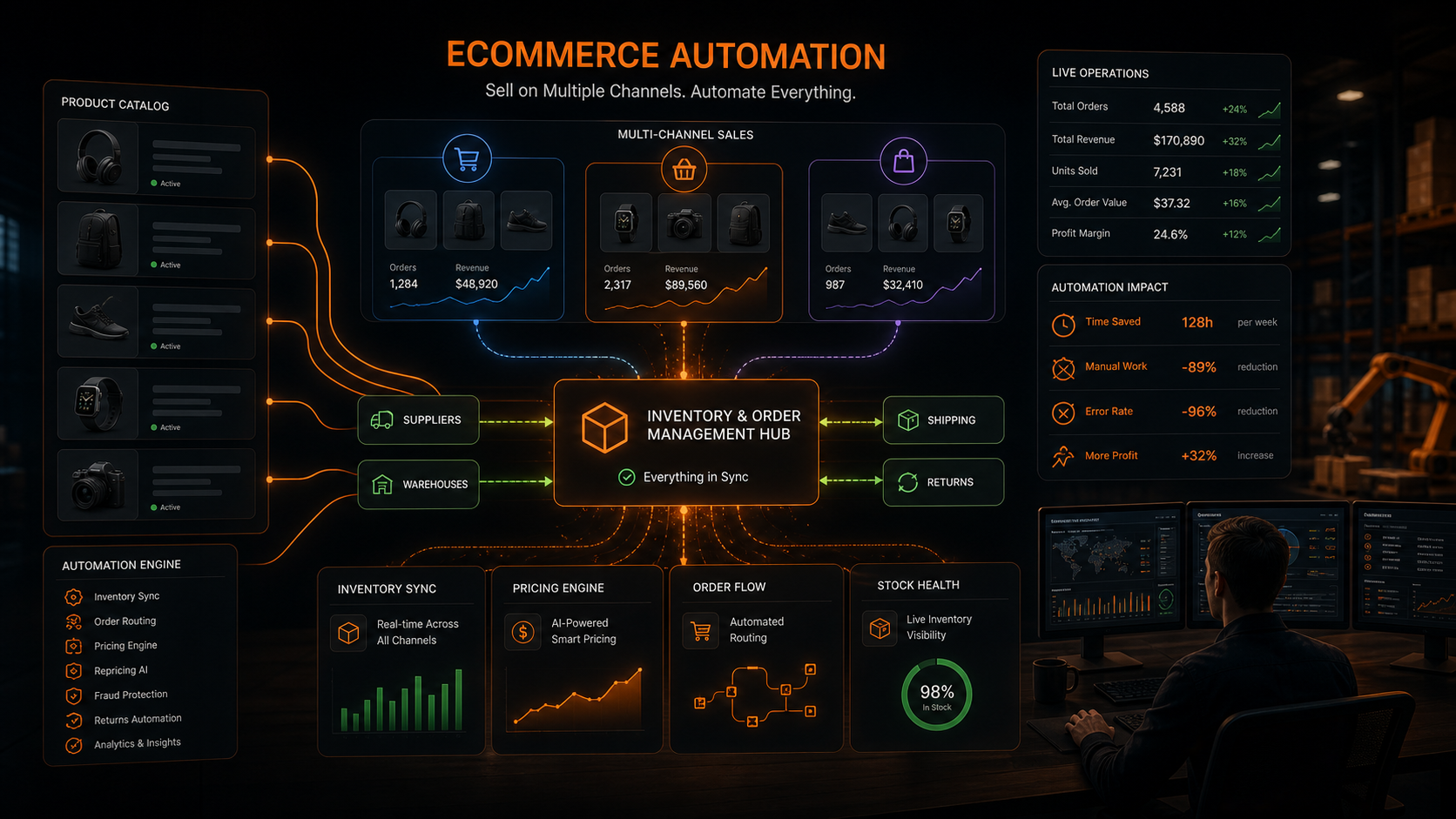
Ecommerce Automation: Sell on eBay, Amazon, and TikTok Shop
15 min read
 Ecommerce Automation
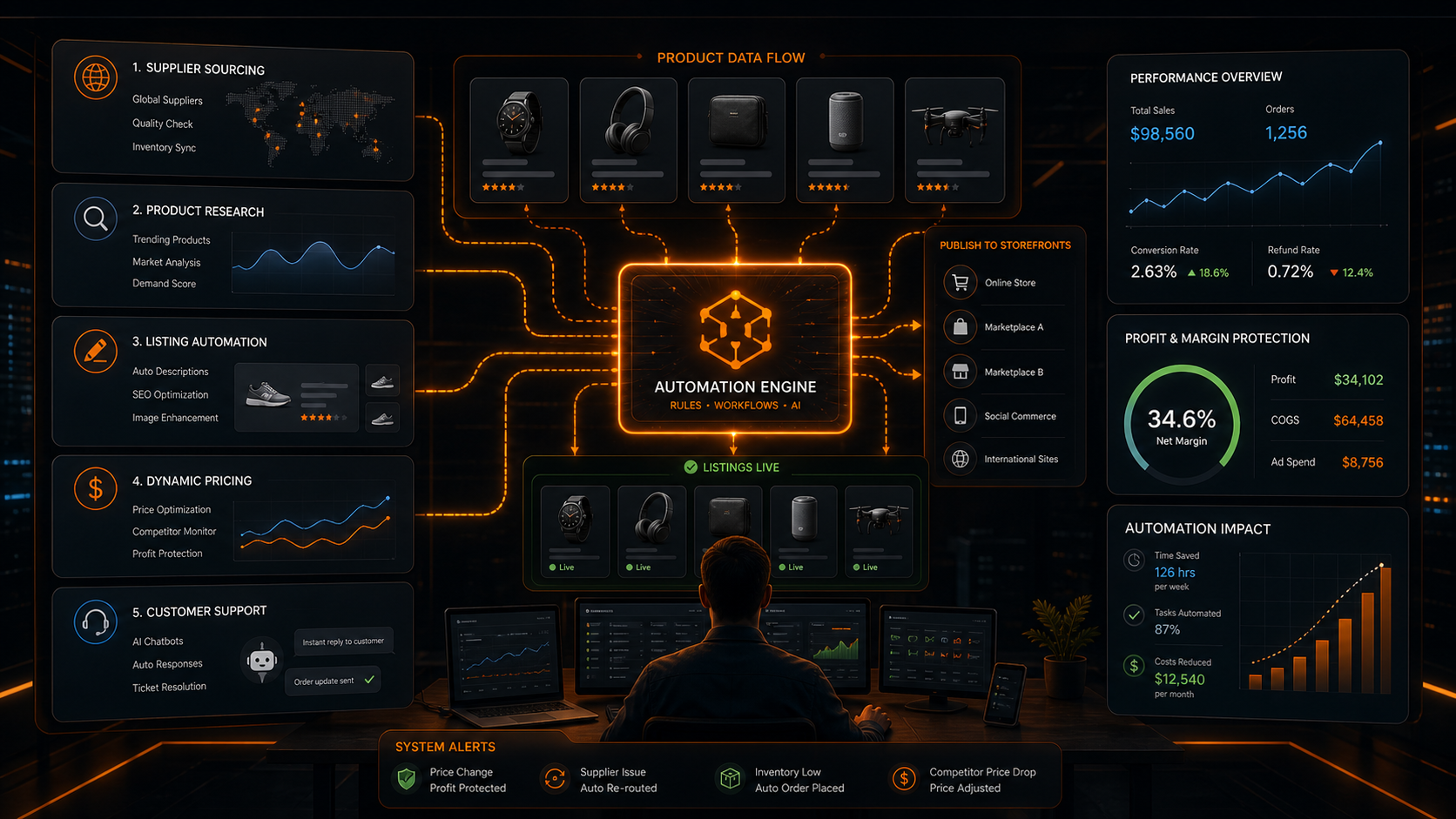
Dropshipping Automation Tools: The Ultimate 2026 Guide
15 min read
 Ecommerce Automation
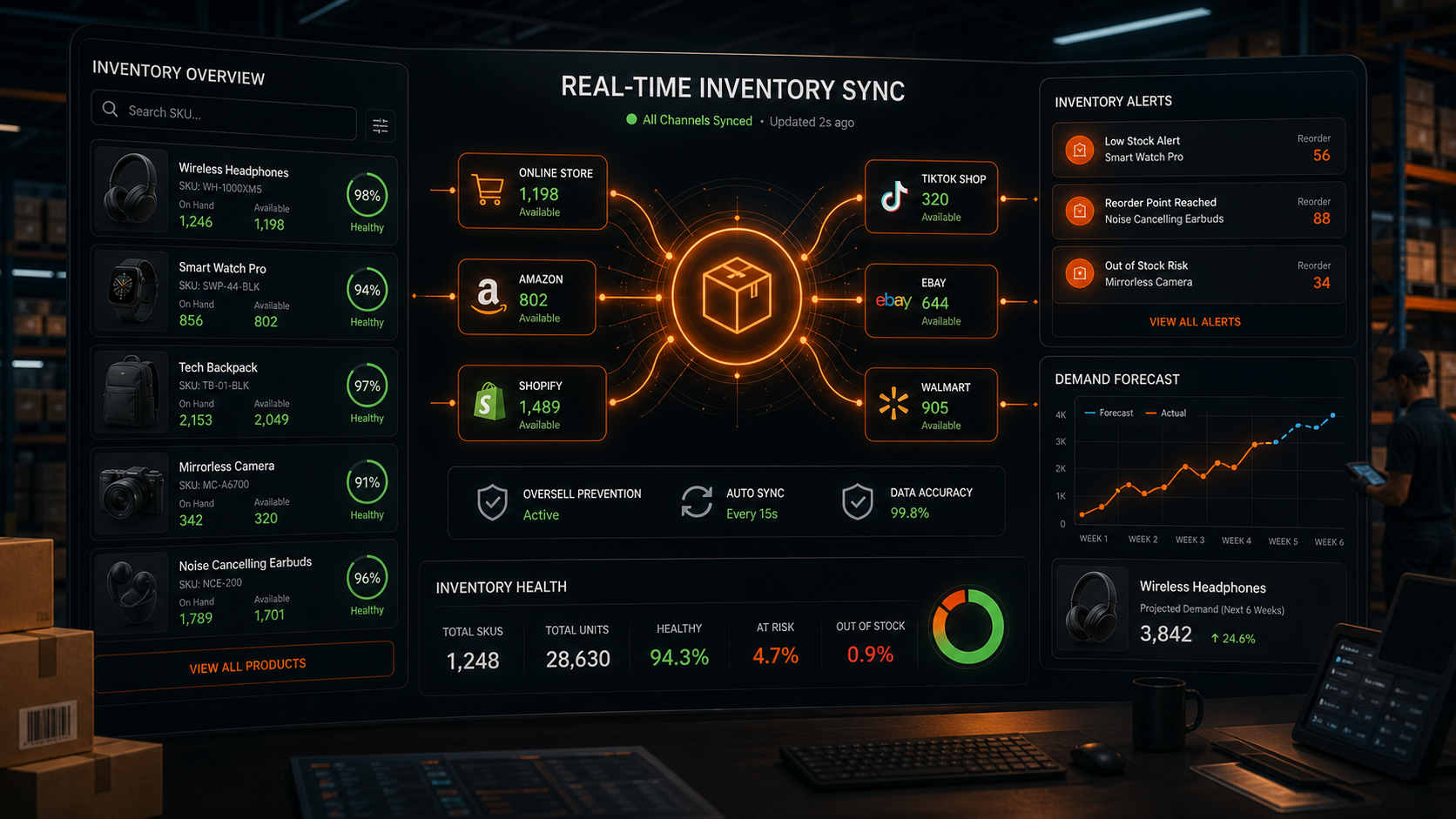
AI Inventory Management for Ecommerce: Real-Time Sync
11 min read
 AI Automation
AI Automation for Small Businesses: ROI Guide 2026
15 min read
Let's fill your calendar with booked clients.
Book a free growth audit. We'll map your biggest opportunities and the fastest path to revenue — whether we work together or not.